
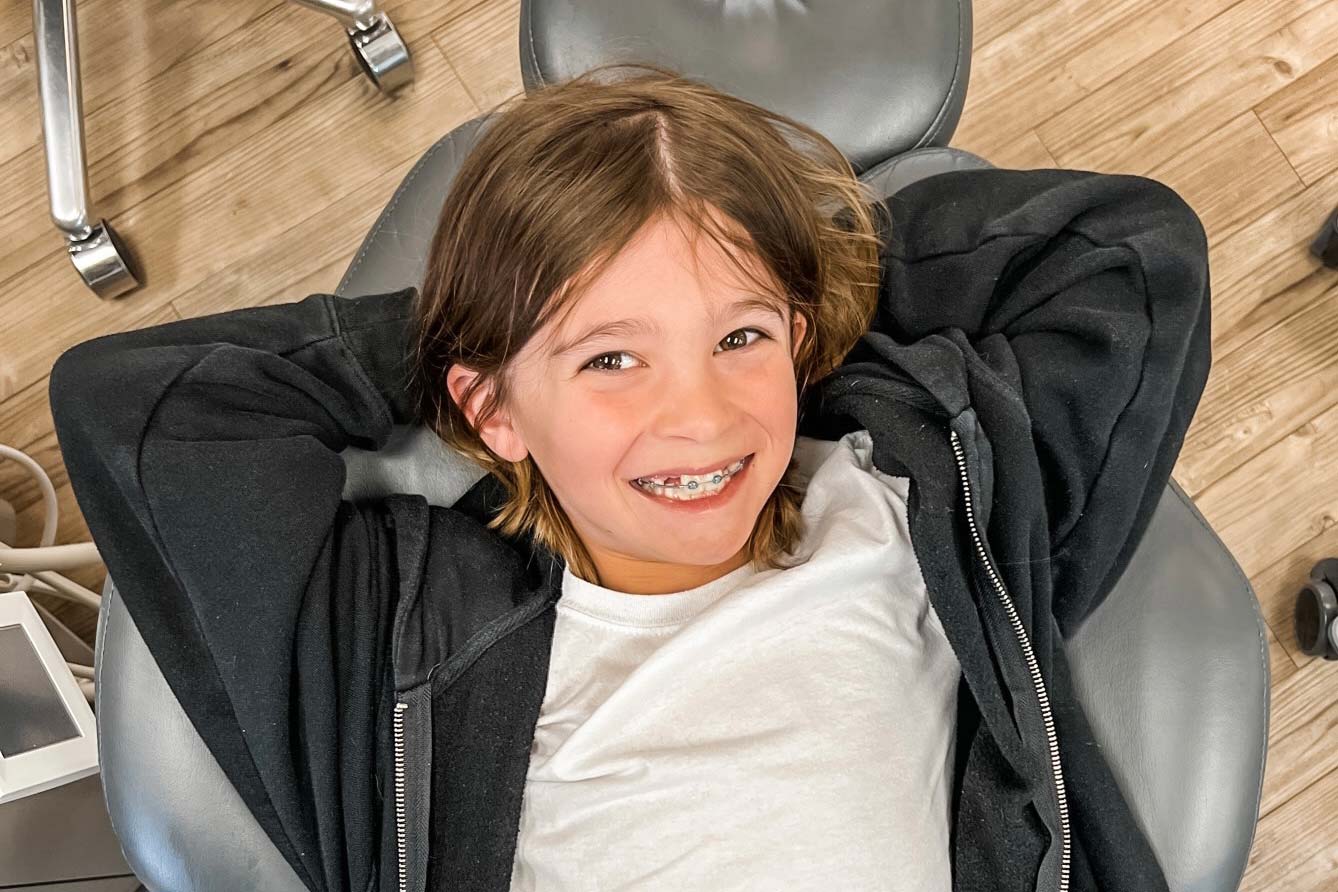
The American Association of Orthodontists recommends children have their first orthodontic evaluation by age 7. By this age, the first adult molars have typically erupted, giving an orthodontist a clear view of how the bite and jaws are developing. Most kids simply need monitoring at this stage, with no immediate treatment required.
This early check doesn’t mean braces are coming right away. The visit is about observation, not intervention. If you notice crowding, a crossbite, or effects from thumb-sucking before age 7, scheduling an earlier visit makes sense. Many families bring their children in around this age for peace of mind, even when nothing seems wrong. Catching small issues early can save bigger headaches later, and an early look gives parents a clear idea of what’s ahead. At Rucker Orthodontics, board-certified orthodontists and AAO members guide each evaluation with a focus on what’s truly best for your child’s smile journey.
Why Age 7 Is the Right Age to First See an Orthodontist
By age 7, the mix of baby and permanent teeth gives a specialist in orthodontics enough information to spot patterns in development. The bite is taking shape. The jaws are still growing. That combination creates an ideal window to identify issues that respond best to early action.
What Happens at a Child’s First Orthodontic Visit
That first orthodontic visit is designed to be comfortable and informative for both you and your child. Expect a friendly, low-pressure environment where questions are welcomed. During the evaluation:
Thorough examination
The orthodontist will carefully examine your child’s teeth, jaws, and facial structure. This hands-on assessment reveals how the bite comes together and identifies any developing concerns.
Advanced imaging
Digital X-rays or 3D scans provide a complete picture of teeth that haven’t erupted yet, bone development, and jaw positioning. These images help create an accurate treatment timeline.
Growth and habit discussion
You’ll talk about your child’s growth patterns, any oral habits like thumb-sucking or mouth breathing, and your family’s dental history. These factors all influence orthodontic development.
Personalized recommendations
Based on the evaluation, you’ll receive one of three recommendations:
- Monitor: Your child’s development looks good, and growth will be tracked at regular intervals
- Phase 1 treatment: Early intervention would benefit your child’s bite or jaw development
- Wait: Full treatment will be more effective once all permanent teeth have erupted
You’ll leave with a clear timeline and an understanding of next steps, whether that’s scheduling a follow-up in six months or beginning treatment. At Rucker Orthodontics, this first visit is offered as a free consult so families can make informed decisions without pressure.
Benefits of Early Orthodontic Evaluation
Getting your child evaluated by age 7 opens up treatment possibilities that simply aren’t available once growth is complete. Early evaluation matters for several reasons, and the board-certified team at Rucker Orthodontics often points to these as the biggest wins for kids who come in early.
How Does Early Evaluation Guide Jaw Growth?
While bones are still developing and responsive, orthodontic appliances can shape how the jaws grow together. This is an important window in childhood development. An orthodontist can use this growth period to gently steer the upper and lower jaws into better alignment, often avoiding more invasive procedures later. Think of it as working with nature instead of against it.
Can Early Treatment Create Room for Permanent Teeth?
Yes! Early intervention can make space for incoming adult teeth, often reducing or eliminating the need for extractions later. Phase 1 treatment options like expanders and space maintainers create the room those big adult teeth need to come in straight and healthy.
What About Harmful Habits and Breathing?
Thumb-sucking, tongue thrusting, and mouth breathing can all be addressed before they cause lasting changes to tooth position or jaw shape. Airway issues that affect sleep quality and overall development can be identified and treated early too. Front teeth that stick out are also more vulnerable to injury, and early treatment reduces this risk significantly.
Many children who receive early intervention need shorter, less complex treatment during their teen years. According to the American Association of Orthodontists, early evaluation allows orthodontic specialists to determine the best time to begin treatment for each individual child.
What’s the Difference Between Phase 1 Treatment and Waiting for All Permanent Teeth?
Understanding your options helps you make the best decision for your child. Two main paths exist. Each has its place. Here’s how they compare.
| Factor | Phase 1 + Phase 2 (Two-Phase) | Single-Phase Treatment |
|---|---|---|
| Typical age range | Phase 1: ages 7-10; Phase 2: ages 11+ | Ages 11-14 |
| Best suited for | Skeletal issues, severe crowding, crossbites, jaw discrepancies | Primarily cosmetic alignment concerns |
| Treatment focus | Phase 1 guides growth; Phase 2 refines alignment | Full alignment of all permanent teeth |
| Total treatment time | Longer overall, but each phase is shorter | One continuous treatment period |
| Potential to avoid | Extractions, jaw surgery, more invasive procedures | N/A |
Phase 1 treatment works best when there’s a skeletal issue, like a narrow palate or an underdeveloped jaw, that responds better to treatment while your child is still growing. Single-phase treatment is often appropriate when the primary concerns are cosmetic and the jaws are developing normally.
Your specialist in orthodontics will recommend the approach that gives your child the best possible outcome. Two-phase treatment isn’t necessary for every child. When it is recommended, it can prevent more invasive procedures down the road.
Early Treatment or Waiting? Common Situations
Here’s how the decision usually plays out for the situations parents ask about most:
| Situation | Best Approach | Why |
| Mild crowding, no bite issues | Wait and monitor | Most issues can be addressed once all permanent teeth are in |
| Underbite or crossbite | Early (Phase 1) treatment | Easier to correct while the jaws are still growing |
| Severe crowding with a narrow palate | Early treatment with expansion | Creates room for adult teeth and can help avoid extractions |
| Cosmetic alignment only | Wait until the early teen years | A single phase of treatment is often more efficient |
| Protruding front teeth at risk for injury | Early treatment | Reduces the risk of trauma during sports and play |
Factors That Influence the Cost of Early Orthodontic Care
Many parents wonder about the financial side of orthodontic care. Cost depends on a few key things, and knowing them upfront takes the guesswork out of planning.
| Cost Factor | What to Know |
|---|---|
| Initial visit | At Rucker Orthodontics, initial consultations are offered as a free consult |
| Phase 1 vs. full treatment | Phase 1 treatment typically costs less than full braces or Invisalign |
| Appliance type | Expanders, partial braces, and habit appliances each have different costs |
| Insurance coverage | Many dental plans include orthodontic benefits for children |
| Payment flexibility | Low monthly payment options, HSA/FSA funds can make treatment more accessible |
Several other variables can shift the final number too. The length of treatment matters, since longer cases involve more visits and adjustments. Appliance complexity also plays a role; a simple habit appliance is very different from a custom expander combined with partial braces. The number of phases recommended will also influence the overall investment, as two-phase treatment splits costs across two periods of care rather than one.
Families should ask their chosen practice for a complete breakdown of treatment fees, insurance benefits, and payment options before making any decisions. Most practices, Rucker Orthodontics included, are happy to walk you through the numbers in plain language so there are no surprises along the way.
Signs Your Child Should See an Orthodontist Now
While age 7 is the general guideline, certain signs warrant an earlier visit. The three most common red flags are unusual tooth loss timing, trouble chewing, and visible crowding or crossbite. Several other indicators are worth watching for too. Look out for these:
- Unusual tooth loss timing: Baby teeth lost before age 5 or still present after age 7 can signal development issues
- Chewing or biting difficulties: Trouble eating certain foods or complaints about jaw discomfort
- Speech concerns: Lisping or difficulty pronouncing certain sounds
- Breathing patterns: Mouth breathing, snoring, or restless sleep that might indicate airway obstruction
- Persistent habits: Thumb-sucking past age 5 or prolonged pacifier use
- Visible misalignment: Crowded teeth, teeth that don’t meet properly, or teeth that appear blocked from coming in
- Jaw issues: Clicking sounds, shifting when opening or closing, or jaws that look out of proportion
If you notice any of these signs, don’t wait until your child turns 7. An earlier evaluation can identify problems and determine whether intervention would help.
Frequently Asked Questions
Is age 7 too early for braces?
Most 7-year-olds don’t receive braces at their first visit. The evaluation is simply a check-up to assess how teeth and jaws are developing. If treatment is needed, it’s usually a limited intervention like an expander rather than full braces. Many children are placed on a monitoring schedule and don’t begin treatment until their teen years.
What if my child is older than 7?
It’s never too late for an orthodontic evaluation. While early assessment is ideal, children of any age can benefit from an orthodontic check-up. The evaluation will determine what treatment, if any, would help your child achieve a healthy, confident smile. Families with kids of all ages are welcomed in for an honest look at where things stand.
What if my child has no obvious problems?
Many alignment and bite issues aren’t visible to parents, which is exactly why the AAO recommends a first visit by age 7. A specialist in orthodontics looks at jaw development, airway, tongue posture, and how permanent teeth are coming in beneath the gumline. An evaluation gives you peace of mind, and if everything looks great, you’ll know that too.
Why see an orthodontic specialist instead of a general dentist for this evaluation?
A specialist in orthodontics has 2-3 years of additional training beyond dental school, focused entirely on tooth movement, jaw growth, and bite development. General dentists do excellent work in their specialty, but an orthodontic evaluation, especially during active growth, benefits from a specialist’s eye.
Do baby teeth need to fall out before seeing an orthodontist?
No. The mixed dentition stage, when your child has both baby teeth and permanent teeth, is actually an ideal time for evaluation. This combination gives orthodontists valuable information about how adult teeth are developing and whether there’s enough space for them to come in properly.
How long does a child’s first orthodontic visit take?
Plan for about 45-60 minutes for your child’s initial evaluation. This allows time for a thorough examination, any necessary imaging, and a detailed discussion about findings and recommendations. You’ll have plenty of opportunity to ask questions.
Will my child need braces twice with two-phase treatment?
Phase 2 treatment is typically shorter and simpler than it would have been without Phase 1 intervention. While your child will wear braces or aligners during both phases, the second phase often requires less time because the groundwork has already been laid. Think of it as building a strong foundation that makes the final result easier to achieve.
Does insurance cover early orthodontic evaluations?
Many dental insurance plans do cover orthodontic evaluations for children. Coverage varies by plan, so checking your specific benefits before the visit is helpful. At Rucker Orthodontics, the initial visit is offered as a free consult regardless of insurance status, so families can get answers without any cost barrier.
Confident smiles truly change people’s lives, and the right time to begin learning about your child’s smile development might be sooner than you think. Early evaluation is one of the simplest steps a parent can take to support healthy growth, and it’s one of the most rewarding too.
Wondering if your child is ready for an orthodontic evaluation? Learning more about early evaluation options is a smart next step for any parent. Two brothers on a mission to bring orthodontic treatment to a whole new level are here whenever you have questions. Smile. Pass it on!