
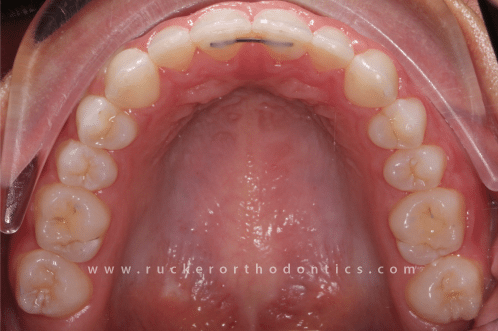
A bonded retainer, also called a permanent or fixed retainer, is a thin metal wire glued to the back of your front teeth to hold them in their new position after braces or Invisalign. It works 24 hours a day with no effort from you and is invisible from the front.
The trade-off is cleaning. You cannot floss normally around a bonded wire, so you need a floss threader, an interdental brush, or a water flosser every day.
Below is what a bonded retainer actually is, how it compares with a removable retainer, how long it lasts, how to clean it, and what to do the day it comes loose.
What Is a Bonded Retainer?
A bonded retainer is a small stainless steel wire, either smooth or braided, that is bonded with dental adhesive to the tongue side of your teeth. It usually spans the lower front six teeth, canine to canine, and it is sometimes placed behind the upper front teeth as well when a case calls for it.
Nothing about it is visible when you smile, and nothing about it depends on your memory. That is the whole point. It sits behind your teeth and quietly holds the result you spent a year or more earning with braces or Invisalign.
Is a Permanent Retainer Really Permanent?
No. “Permanent” only means you cannot take it out yourself. One of our orthodontists can remove it whenever it is appropriate, polish off the adhesive, and leave the enamel healthy underneath. Most bonded retainers stay in place for many years, and plenty of patients keep theirs into adulthood, but it is a removable-by-a-professional appliance, not a lifetime implant.
Why Are They Placed on the Lower Front Teeth?
The lower front teeth are the most likely teeth in your mouth to crowd again after treatment, and they will do it whether or not you ever had braces. Teeth drift with age the same way skin creases with age. Bonding a wire across exactly those teeth removes the highest-relapse area from the equation entirely.
How Do Bonded and Removable Retainers Compare?
Most patients end up with both: a bonded wire on the lower front teeth and a removable retainer worn at night for full-arch stability. They are solving slightly different problems.
| Bonded (permanent) retainer | Removable retainer | |
|---|---|---|
| How it stays in | Bonded behind the front teeth, full time | You put it in and take it out |
| Effort required | None — it cannot be forgotten | Depends entirely on nightly wear |
| Teeth covered | Usually the front six only | The whole arch, including back teeth |
| Cleaning | Harder — floss threader or water flosser daily | Easy — take it out and brush it |
| Visibility | Hidden behind the teeth | Clear trays are nearly invisible; a Hawley shows a wire |
| Common failure | A bond loosens or the wire breaks | Lost, warped, or simply not worn |
| Best for | Anyone who might forget, and high-relapse lower fronts | Whole-arch stability and easy hygiene |
Neither one is universally better. Research comparing fixed and removable retention keeps landing in the same place: both hold alignment well when they are used as directed, and the real difference is human behavior. A wire you cannot forget beats a tray you leave in a drawer.
What Are the Advantages of a Bonded Retainer?
It Does Not Rely on Cooperation
This is the reason our doctors recommend one for so many patients. There is no nightly decision to make, no case to lose on a school trip, and no parent asking a teenager whether the retainer went in. The wire is simply there.
It Protects the Teeth Most Likely to Move
Retention fails most often in the lower incisors. Bonding those teeth together holds the exact segment that would otherwise crowd first.
Nobody Can See It
The wire sits on the tongue side of the teeth. In photos, conversations, and video calls, it does not exist.
It Works While You Sleep, Eat, and Talk
A removable retainer holds your teeth for the hours you wear it. A bonded retainer holds them for all of them.
What Are the Disadvantages of a Bonded Retainer?
Flossing Takes a New Technique
You cannot pass floss straight down between two teeth that are joined by a wire. Skipping those contacts instead of adapting is how plaque, tartar, decay, and gum inflammation get started.
Tartar Builds Up If Cleaning Slips
The wire is a shelf for hardened deposits. Regular professional cleanings are not optional with a bonded retainer; they are part of the maintenance plan.
It Can Come Loose Without Warning
A bond can fail on one tooth while the rest of the wire stays put. That is easy to miss, and a freed tooth starts drifting. A loose end can also scratch your tongue.
It Only Holds the Front Teeth
Bonded wires do nothing for your back teeth or your arch width, which is why so many patients pair one with a night-time removable retainer.
How Do You Clean a Bonded Retainer?
Cleaning is the entire difference between a bonded retainer that protects your smile and one that causes problems. It takes an extra minute a day.
Daily Routine
- Brush around the wire, not just over it. Angle the bristles toward the gumline and along the underside of the wire, twice a day.
- Use a floss threader or superfloss. Thread the floss under the wire, then clean each contact normally. Once you have the motion, it takes about a minute.
- Add a water flosser or interdental brush. A water flosser flushes debris out from under the wire quickly and is the easiest habit to keep for most patients.
Every Six Months
Keep your regular dental cleanings. A hygienist can remove the tartar that daily brushing misses, and your dentist can spot a lifted bond before it turns into shifting teeth. Our team also checks your retainers at your appointments. For habits that apply to both retainer types, see our guide to proper retainer care.
What to Avoid
Hard and sticky foods are what usually break the bond: ice, hard candy, whole apples and carrots bitten with the front teeth, crusty bread, and taffy. Cut hard foods into pieces and chew with your back teeth.
How Long Does a Bonded Retainer Last?
With good hygiene and sensible eating, a bonded retainer commonly lasts many years, and it is not unusual for one placed in the teen years to still be doing its job well into adulthood. Wires do not expire on a schedule. They fail from a specific event, usually a hard bite or years of tartar working under a bond.
What matters more than the number is monitoring. Run your tongue along the wire now and then. If a section feels sharp, loose, or different from last week, call us.
What Should You Do If Your Bonded Retainer Breaks?
Treat it as time-sensitive, but not as an emergency-room event.
- Call our office. A loose wire is a quick repair when it is caught early and a much bigger conversation once teeth have moved.
- Do not pull or bend it. Trying to reseat it yourself usually detaches more of the bond.
- Cover a poking end. Orthodontic wax over the sharp spot protects your tongue until we can see you.
- Wear your removable retainer if you have one. It will help hold your teeth in the meantime.
We keep time open for repairs like this at both our Temecula and Murrieta offices.
Is a Bonded Retainer Right for You?
A bonded retainer tends to be the right call if you have significant lower front crowding corrected, a history of forgetting appliances, a teenager finishing treatment, or a case that took a long time and is worth protecting without relying on discipline.
A removable retainer alone may suit you better if you have gum disease or heavy tartar buildup, a bite that puts the lower teeth in contact with the upper front teeth, or a strong preference for the simplest possible hygiene. Some patients also start with a bonded wire and switch to nights-only removable wear years later.
That decision is made tooth by tooth, and it is one of the things Dr. Jon Rucker and Dr. Ryan Rucker walk through with you before your braces or aligners come off, using the same digital scanning technology we use throughout treatment.
Frequently Asked Questions About Bonded Retainers
Does getting a bonded retainer hurt?
No. The tooth surface is cleaned, the wire is positioned, and the adhesive is cured. There is no drilling and no anesthetic. Most patients are more aware of the new texture behind their teeth for a few days than of anything else.
How much does a bonded retainer cost?
At most practices, including ours, retention is planned as part of your overall treatment, so ask about it while you are still in treatment rather than after. Replacement and repair costs vary with how much of the wire is affected and whether a new wire has to be made. We will always quote it before we do it.
Can I get a bonded retainer years after braces?
Often yes, if your teeth are still in a healthy, well-aligned position. If they have already shifted, a wire would only lock in the shift, so a short round of realignment usually has to come first. A consultation and a scan will tell you which situation you are in.
Will a permanent retainer set off a metal detector or affect an MRI?
It will not set off airport security. For an MRI, tell the technician you have a fixed orthodontic wire; it is generally not a problem, but the imaging team will decide based on the area being scanned.
Can I use a water flosser instead of flossing under the wire?
A water flosser is an excellent daily tool and, for many patients, the one they actually stick with. Threading floss under the wire still cleans the tooth contacts most thoroughly, so the best routine uses both.
Protect the Smile You Just Earned
Retention is the part of orthodontics that decides whether your results last five years or fifty. If you are finishing treatment, wondering whether your existing wire is still doing its job, or dealing with one that has come loose, we can help.
Schedule your free consultation with Rucker Orthodontics in Temecula or Murrieta, and we will show you exactly what your retention plan should look like.