
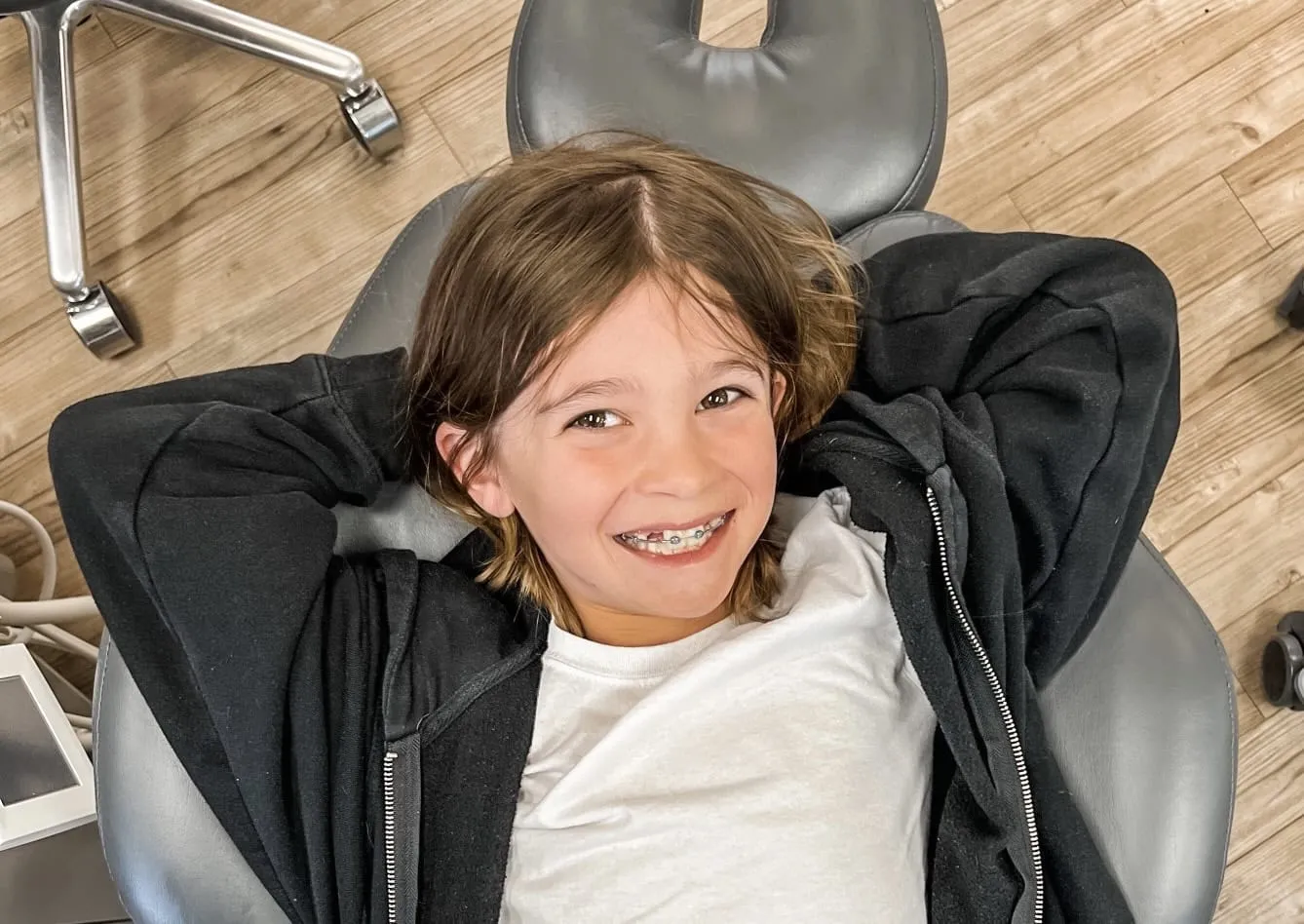
Braces usually feel sore for about two to four days after they are first placed or after a wire change. For some patients the tenderness lasts a week or a little longer. The ache is a dull pressure, not sharp pain, and it fades as your teeth and mouth adjust.
If you or your child is about to start treatment, it is completely normal to wonder how much braces will hurt. The honest answer is that most people feel some soreness at the start and after certain visits, and very little in between. Below, our team explains why the soreness happens, what the first week tends to feel like, how Damon braces change the experience, and the simple things that help at home.
Why Do Braces Make Your Teeth Sore?
Braces work by applying gentle, steady pressure to your teeth. That pressure causes the bone and the ligament that hold each tooth to remodel, which is what allows the tooth to move. The ligament around a tooth is full of tiny nerve fibers, so when pressure is first applied, the teeth feel tender, especially when you bite down. That feeling is a sign the braces are doing their job.
Soreness has two separate sources, and it helps to tell them apart. The first is the teeth themselves, which feel achy and sensitive to chewing. The second is the soft tissue: your cheeks, lips and tongue need time to get used to brackets and wires that were not there before. Tooth soreness fades as the teeth settle into the new pressure, and cheek irritation fades as the tissue toughens up over the first couple of weeks.
How Long Does Braces Pain Last After They Go On?
Most patients notice the first tenderness within a few hours of getting braces. It typically builds over the first day or two, peaks around the second or third day, and then eases off. Our patient guidance is that general soreness usually takes about two to four days to subside after your braces are bonded or your wire is changed. A smaller group of patients feels tender for a week or more, which is still within the normal range.
Many families ask whether starting braces on the same day as the consultation makes the first week harder. It does not change how the teeth respond. Our post on same day braces explains that a same day start is offered to eligible patients once the evaluation is complete and the plan is ready, and the soreness afterward follows the same pattern as any other start.
Here is how the timeline usually looks for a new patient:
| When | What most patients feel | What helps |
|---|---|---|
| Day 1 | Pressure begins a few hours after placement; cheeks notice the brackets | Soft foods, cool water, orthodontic wax on any rubbing spot |
| Days 2 to 4 | Peak tooth tenderness, especially when biting | Over the counter pain relief as directed, soft meals |
| Days 5 to 7 | Soreness fading; chewing feels more normal | Return to normal foods that are safe for braces |
| Week 2 and beyond | Cheeks and lips have adjusted; little or no daily ache | Good brushing and flossing habits |
| After a wire change | A shorter, milder repeat of days 1 to 4 | The same simple steps as the first week |
Do Damon Braces Hurt Less Than Traditional Braces?
Rucker Orthodontics is a certified Damon System braces provider, and comfort is one of the reasons. Traditional braces use elastic ties to bind the wire into each bracket, which creates higher pressure and friction and the familiar tightening feeling after a visit. Damon braces do not need elastic ties. A small sliding door built into each bracket holds the wire instead, and the system pairs those tie-less brackets with high-tech archwires that use lighter forces.
Our braces page explains that Damon brackets are smaller and smoother, so cheeks have less to rub against and teeth are easier to clean. You will still feel pressure at the start of treatment, because moving teeth always involves some pressure, but many patients describe the experience as more comfortable than they expected. If you are weighing appearance as well, our comparison of clear braces vs. metal braces covers Damon Clear.
What Helps Sore Teeth From Braces?
A few simple steps make the first week much easier. For general tooth soreness, our team recommends over-the-counter pain relievers such as Tylenol, Motrin or Advil, taken as the label directs. Choose soft foods for the first few days, such as yogurt, smoothies, scrambled eggs, pasta, soup and mashed potatoes. Cutting food into small pieces and chewing with your back teeth also reduces the pressure on tender front teeth.
Cool drinks can feel soothing, and a warm salt water rinse can calm irritated gums and cheeks. Keep brushing gently even when your teeth are tender. Food trapped around brackets makes gums puffy and sore, which adds to the discomfort. Our guide to caring for your braces walks through brushing and flossing around brackets, and Dr. Rucker recommends an electric toothbrush and a platypus flosser for exactly this reason.
What About Cheek Irritation and Poking Wires?
When a bracket or wire rubs the inside of your cheek or lip, orthodontic wax is the quickest fix. Dry the area with cotton or a tissue, pinch off a small piece of wax, roll it into a ball and press it over the spot that is rubbing. The wax creates a smooth barrier so the tissue can heal. Most patients only need it for the first week or two, until the cheeks toughen up.
A wire that is actually poking, or a bracket that has come loose, is different from normal soreness. Our comfort appointments page explains how to handle loose brackets, wire irritation and sore teeth, and lets you tell our team what is going on so we can judge how urgent it is and schedule you accordingly. The older guide to orthodontic emergencies covers the same common problems.
When Should Braces Soreness Worry You?
Normal braces soreness is a dull ache that improves day by day. Call our office if the soreness is getting worse instead of better after several days, if it feels unbearable even with over-the-counter pain relief, or if one spot is sharply painful rather than generally tender. A wire that has slipped out of place, a broken bracket or a sore that is not healing are all reasons to be seen.
You can call or text our team at (951) 302-0685. Describing the problem clearly helps our team decide whether you need to come in right away or whether a quick fix at home will hold until your next visit.
Frequently Asked Questions
Does getting braces put on hurt?
The placement visit itself is generally comfortable. Brackets are bonded to the surface of the teeth. The soreness people talk about starts a few hours later, as the wire begins to apply pressure.
Do braces hurt every time they are adjusted?
Many patients feel some tenderness after a wire change, but it is usually milder and shorter than the first week. Damon braces are designed to need fewer office visits than traditional braces.
Can my child go to school the day after getting braces?
Yes. Most kids and teens go to school as usual. Pack a soft lunch for the first few days and send a small case of orthodontic wax in their backpack.
Is Invisalign less painful than braces?
Invisalign also causes pressure, mostly for a day or two after switching to a new set of aligners. Both involve some pressure, and the right choice depends on your bite and goals. Your orthodontist can walk you through both at a consultation.
Talk With Our Team About Starting Braces Comfortably
At Rucker Orthodontics, brothers Dr. Jon Rucker and Dr. Ryan Rucker care for patients in Temecula and Murrieta, and comfort is part of every treatment plan. If you have questions about what braces will feel like for you or your child, request your free consultation or call (951) 302-0685.