
An anterior crossbite is a bite in which one or more upper front teeth close behind the lower front teeth instead of in front of them. It does not correct itself. Caught early, usually between ages 7 and 10, it is one of the most straightforward bite problems to fix. Left alone it wears enamel and strains the gums.
What Does an Anterior Crossbite Look Like?
Ask the person to bite together normally and look at the front teeth. In a typical bite, the upper incisors sit slightly in front of the lower ones. In an anterior crossbite, at least one upper incisor is trapped behind its lower counterpart. Parents often describe it as an “underbite look” on one tooth, or notice their child sliding the jaw forward to close comfortably.
Single-Tooth vs. Full-Segment Crossbite
A single tooth in crossbite is usually a spacing or eruption-path problem: the permanent incisor came in behind the baby tooth it replaced, or there was not quite enough room at the moment it erupted. When every upper incisor sits behind the lower ones, we look harder at jaw relationship — the lower jaw may be growing ahead of the upper. The two situations look similar in a photo and are treated very differently, which is why an exam beats an internet diagnosis.
Dental, Functional, or Skeletal
Orthodontists sort anterior crossbites into three buckets. A dental crossbite is about tooth position only. A functional crossbite happens when teeth meet edge to edge and the patient shifts the jaw forward to get past them — the bite looks worse than the underlying skeleton is. A skeletal crossbite reflects the size or position of the jaws themselves. Records and a clinical exam separate them; a functional shift in particular is easy to miss without watching the patient close slowly.
What Causes an Anterior Crossbite?
- Crowding or a short upper arch that leaves an erupting incisor no room to come forward.
- Retained baby teeth that divert the permanent tooth behind the arch.
- Extra or missing teeth that disturb the eruption sequence.
- Inherited jaw proportions — a larger lower jaw or a smaller upper one tends to run in families.
- Long-standing oral habits, including thumb sucking and mouth breathing that changes tongue posture, which is part of why we look at airway and habit factors during a growth exam.
Why Not Just Wait and See?
Because an anterior crossbite is a mechanical problem, and the mechanics get worse with time. The lower incisor takes the full force of the upper tooth on every bite, which wears the edge and can push the gum down off the root. The trapped upper tooth is held back while the rest of the arch develops around it. And if the patient is shifting the jaw to close, that posture is being practiced thousands of times a day during the years the jaws are growing.
The counterweight is that early treatment is genuinely easier. The American Association of Orthodontists recommends a first orthodontic check by age 7, and a crossbite is precisely the kind of finding that visit exists to catch — the same reasoning behind early interceptive treatment.
How Is an Anterior Crossbite Corrected?
Treatment depends on which bucket the crossbite falls into and how much growth is left.
| Situation | Common approach | Typical timing |
|---|---|---|
| One upper incisor behind the bite, growing child | Limited braces on the front teeth, or a bonded bite turbo to unlock the bite | A few months |
| Narrow upper arch with crowding | Arch expansion, then alignment | Phase 1, then re-evaluate |
| Whole front segment, upper jaw behind | Growth-guiding appliance while growth remains | Best before the growth spurt |
| Adult, teeth-only crossbite | Full braces or clear aligners | 12–24 months, case dependent |
| Adult, significant jaw discrepancy | Orthodontics with a surgical consult | Planned jointly |
Correcting a single tooth is often quick, and the result is stable once the tooth is in front of the bite — the bite itself then holds it there. You can see how one of these cases progressed in our anterior crossbite case, and our page on common orthodontic issues puts crossbite in context with the other bite problems we treat.
What Does an Untreated Crossbite Do Over Time?
The damage from an anterior crossbite is cumulative and mostly falls on the lower front teeth, which absorb the force of an upper tooth landing behind them thousands of times a day. Three patterns show up repeatedly in adult patients who were never treated:
- Worn incisal edges. The biting edges flatten and chip. Enamel does not grow back, so restoring it later means bonding or veneers on teeth that were healthy.
- Gum recession on the lower incisors. Persistent pressure on a thin band of gum tissue pushes it down the root, exposing sensitive surfaces and a longer-looking tooth.
- Loading the jaw joint from a shifted position. When a patient has spent years closing into a forward posture to clear the bite, the muscles and joint adapt to a position the skeleton did not choose.
None of this happens overnight, which is exactly why the problem gets postponed. The practical point is that treating a crossbite in a ten-year-old is a short, inexpensive project, while managing its consequences at forty involves the orthodontist, the restorative dentist, and sometimes a periodontist.
Can Adults Still Have an Anterior Crossbite Corrected?
Yes. Adults come to us with crossbites for two reasons: it was never treated, or it relapsed after treatment finished and the retainer was abandoned. In both cases, tooth movement works at any age — bone remodels throughout life. What changes with adulthood is that growth is no longer available as a tool. A ten-year-old’s narrow upper jaw can be widened at the suture; an adult’s cannot, so the same result has to come from tooth movement, a surgical assist, or a compromise that we would discuss openly with you.
The other adult-specific factor is gum and bone health. If recession has already started on the lower incisors, we plan the mechanics to protect what is left, and we may ask a periodontist to look before we start. This is normal and is not a reason to avoid treatment — the bite that caused the recession will keep causing it if nothing changes.
What Happens at the First Visit?
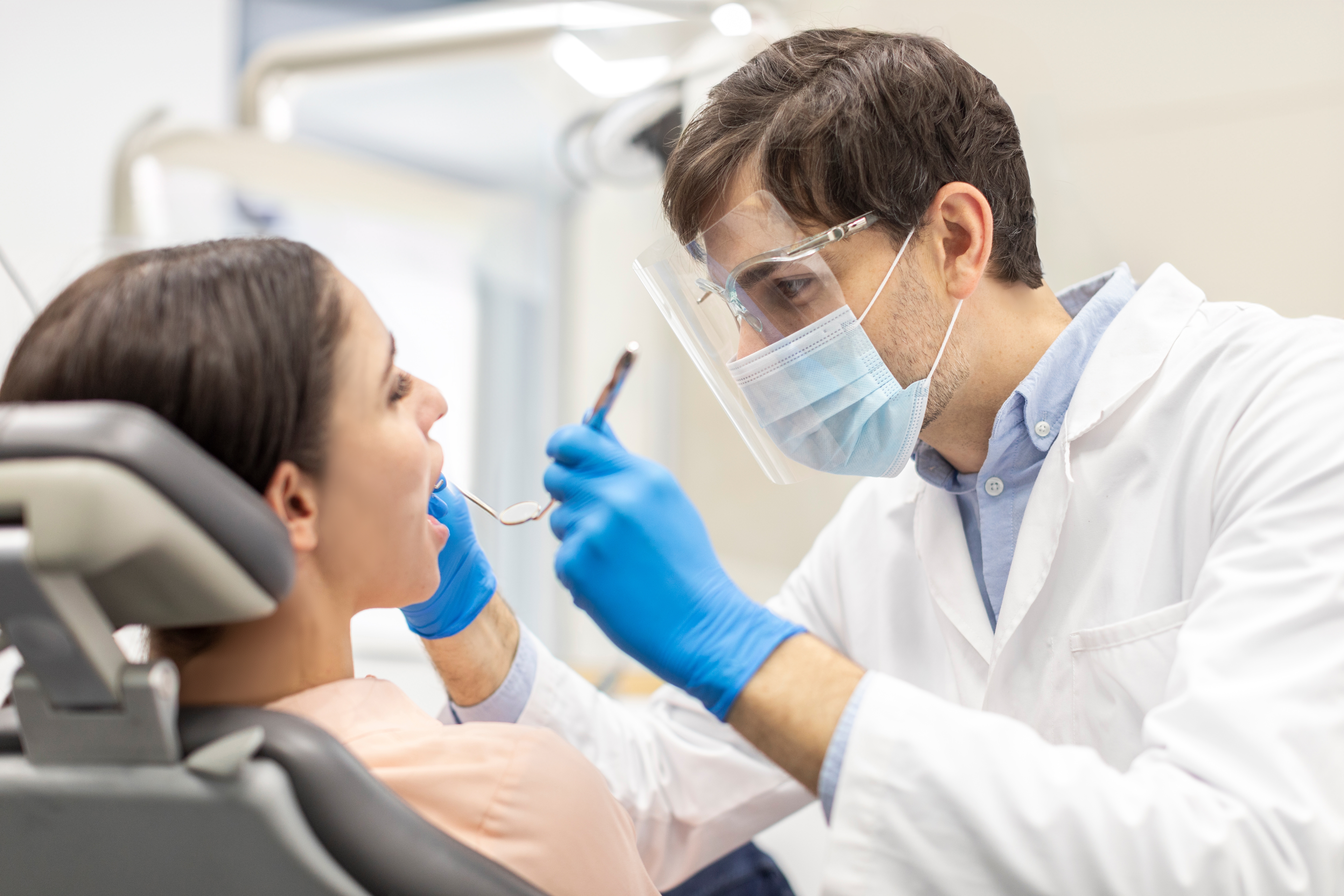
We look at how the teeth meet, watch the patient close slowly to catch a functional shift, and take records — photos, a digital scan, and imaging where it is warranted — using the technology in our offices. From there we can tell you which of the three types you are dealing with, whether treatment should start now or be monitored, and what it would involve. For a growing child, “monitor and re-check in six months” is a legitimate and common answer.
Frequently Asked Questions
Is an anterior crossbite the same as an underbite?
Not quite. An underbite usually describes the whole lower arch sitting ahead of the upper one. An anterior crossbite can be a single tooth. Every underbite involves a crossbite; not every crossbite is an underbite.
Can a crossbite correct itself as my child grows?
No. Once a permanent tooth erupts behind the bite, the bite holds it there. Growth changes the jaw relationship but does not push a trapped tooth forward.
What age is best to treat it?
Often ages 7 to 10, while the front permanent teeth are erupting and growth can be used to help. That said, a dental crossbite can be corrected at any age.
Can clear aligners fix a crossbite?
Frequently, yes, for tooth-position crossbites in patients who wear them consistently. Cases driven by jaw size need a plan that addresses the jaws, not just the teeth.
Talk It Through With Our Team
If your child’s front teeth bite the wrong way round, an exam now is far cheaper than watching enamel wear for another two years. Our team sees these cases every week at our Temecula office and our Murrieta office, and we are happy to take a look before anything gets worse. Request your free consult or call us at (951) 302-0685.