
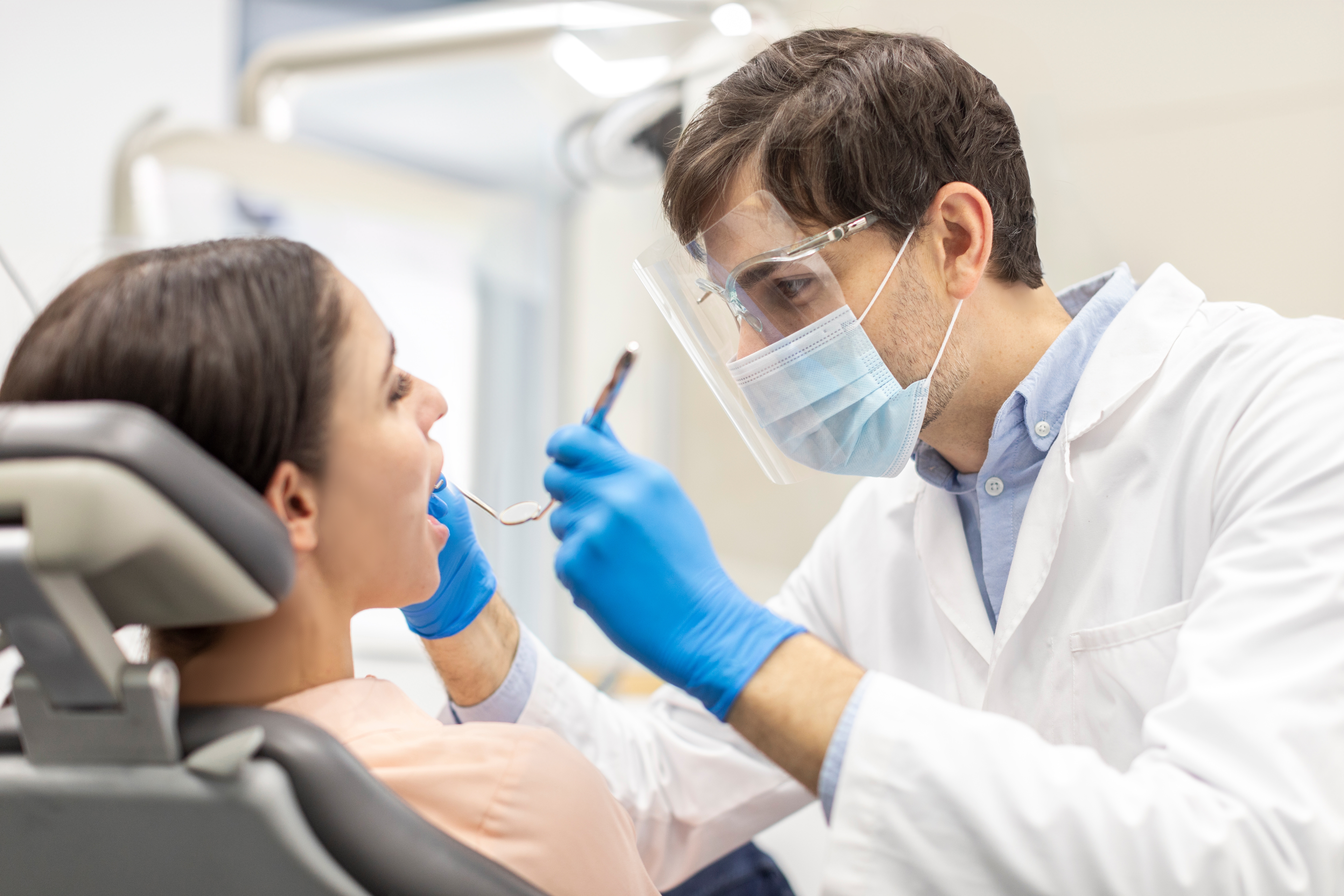
Choosing between braces vs. Invisalign for adults comes down to how involved your case is, your lifestyle, and how you want your smile to look during treatment. Both options can correct crowding, gaps, and bite issues in fully-grown adults. At Rucker Orthodontics, Dr. Rucker helps you weigh the trade-offs so you land on the right fit for your smile goals.
What Are Braces and Invisalign for Adults?
Braces are fixed appliances using brackets and wires bonded to your teeth to guide them into place. Invisalign uses a series of custom, removable clear aligners that shift teeth gradually. Both correct crowding, gaps, and bite issues in fully-grown adults with excellent results.
Braces are fixed appliances that use metal or ceramic brackets bonded to your teeth, connected by wires that guide teeth into place. Invisalign uses a series of custom, removable clear plastic aligners that shift teeth gradually. Both correct crowding, gaps, and bite issues in adults, and both work well on fully-grown jaws.
Adult orthodontics has grown quickly over the past decade. More adults are upgrading their smiles than ever, whether they skipped treatment as kids or want to refine results from years ago. Fully-grown jaws don’t change the biology of tooth movement much, so the same principles apply.
The right choice depends on a few things:
- How involved your case is
- Your daily routine and career
- Whether appearance during treatment matters to you
- Your comfort with wearing aligners consistently
Dr. Rucker will walk you through both options during your free consult and help you understand which approach fits your goals.
How Braces and Invisalign Work
When weighing braces vs. Invisalign for adults, both move teeth by applying gentle, steady pressure over time, but they do it in very different ways. With braces, the movement happens continuously through wires adjusted every 4-8 weeks. Invisalign shifts teeth through a series of aligners you swap out roughly every 1-2 weeks. Most adult cases take 12 to 24 months with either option.
How Braces Work
Brackets get bonded to each tooth with strong adhesive. A wire runs through the brackets, and small adjustments to that wire create the forces that reposition your teeth. Because braces stay on 24/7, they work without any effort on your part. You show up for your visits, and the wire does the rest between adjustments.
For involved cases with severe rotations, deep bites, or vertical movement, Dr. Rucker, a specialist in orthodontics with board certification, may add elastics or other components to guide teeth into the right position.
How Invisalign Works
Invisalign uses fully digital scans to design your entire treatment from the start. Each aligner is calibrated to move specific teeth a fraction of a millimeter. You wear each set for 1-2 weeks, then move to the next in the series.
For this option to work, aligners need to be in your mouth 20 to 22 hours a day. That means only taking them out to eat, drink anything other than water, brush, and floss. Small tooth-colored attachments may be bonded to certain teeth to help the aligners grip and guide trickier movements.
Benefits of Braces vs. Invisalign
Each option brings real advantages, and the “better” one depends on what matters most to you.
Invisalign benefits for adults:
- Nearly invisible, so most people won’t notice you’re in treatment
- Removable for meals, coffee, and special events
- No food restrictions since you take them out to eat
- Easier brushing and flossing with nothing bonded to your teeth
- Fewer comfort appointments for broken brackets or poking wires
- Smooth plastic that’s gentle on cheeks and lips
Braces benefits for adults:
- Highly effective for involved bite issues, severe rotations, and difficult tooth movements
- No compliance concerns since they’re working around the clock
- Ceramic braces offer a lower-profile fixed option for adults who want a more discreet look
- Great for patients who don’t want to think about wearing appliances
- Damon self-ligating braces deliver lighter forces and fewer visits than outdated traditional braces
Both options improve long-term oral health, chewing function, and jaw comfort when treatment wraps up. Straighter teeth are easier to clean, which lowers your risk of cavities and gum issues down the road.
Braces vs. Invisalign: Side-by-Side Comparison
Here’s how the two options stack up across the factors adults care about most:
| Factor | Braces | Invisalign |
|---|---|---|
| Appearance | Visible (metal) or lower-profile (ceramic) | Nearly invisible clear aligners |
| Comfort | Brackets may briefly irritate cheeks | Smooth plastic, minimal irritation |
| Removability | Fixed to teeth 24/7 | Removable for meals and cleaning |
| Food restrictions | Avoid hard, sticky, and crunchy foods | No restrictions, eat normally |
| Oral hygiene | Requires extra brushing and flossing tools | Brush and floss normally with aligners out |
| Best for | Involved bites, severe rotations, vertical movement | Mild to moderate crowding, spacing, and bite correction |
| Office visits | More frequent adjustments needed | Fewer in-office visits, digital check-ins possible |
| Compliance required | None, works automatically | 20-22 hours daily wear needed |
| Typical treatment time | 12-24 months for adults | 12-24 months for adults |
The comparison in braces vs. Invisalign for adults really comes down to lifestyle versus how involved your case is. If you have a straightforward case and value discretion, Invisalign is often the winner. If your case involves bigger corrections or you know consistent aligner wear won’t fit your routine, braces may deliver the more predictable result.
How Much Do Braces and Invisalign Cost?
The cost of braces and Invisalign for adults depends on how involved your case is, treatment length, and materials used. Metal braces are typically the most affordable option, while ceramic braces and Invisalign often cost more due to their aesthetic advantages. Insurance benefits and flexible payment plans can offset a good portion of your out-of-pocket cost.
Several factors influence what you’ll pay:
- How involved your case is: More movement means longer treatment and higher cost
- Treatment length: Longer cases require more materials and visits
- Appliance type: Metal, ceramic, and clear aligners each have different price points
- Retainers: Post-treatment retainers protect your investment and are an additional consideration
- Refinements: Some cases need touch-up aligners or minor adjustments at the end
Rucker Orthodontics offers low monthly payment options so treatment fits your budget. Insurance coverage varies by plan, and we’ll help you understand your benefits during your free consult. For a personalized quote based on your specific case, come in and Dr. Rucker will map out your smile plan and the investment involved.
Who Is a Good Candidate for Each Option?
Most healthy adults are candidates for both braces and Invisalign, but some cases fit one approach better than the other.
Invisalign works well for adults who:
- Have mild to moderate crowding or spacing
- Want a nearly invisible option for work, dating, or social reasons
- Can commit to wearing aligners 20-22 hours a day
- Prefer fewer in-office visits
- Have healthy gums and bone support
Braces work well for adults who:
- Have involved bite problems or severe rotations
- Need vertical tooth movement or significant bite correction
- Don’t want to think about compliance during treatment
- Have a lifestyle that makes consistent aligner wear tough
- Want the predictability of a fixed appliance
Adults with healthy gums and adequate bone support around their teeth are candidates for both. If you have active gum disease or untreated cavities, those need to be addressed first. Airway concerns, jaw joint issues, or bite discrepancies may also influence which approach Dr. Rucker recommends, drawing on his board-certified training as a specialist in orthodontics.
The only way to know for sure is an orthodontic exam. During your free consult, we’ll take fully digital scans, review your bite, and give you a straight answer about which option fits your case.
Frequently Asked Questions
Is Invisalign as effective as braces for adults?
For mild to moderate cases, Invisalign can deliver beautiful smiles that match braces in appearance and function. For involved cases with severe rotations, deep bites, or vertical movement, braces often give more predictable results. Effectiveness depends heavily on wearing aligners the required 20-22 hours daily.
How long does adult orthodontic treatment take?
Most adult treatments take 12 to 24 months, though timelines vary based on how involved your case is and the treatment type. Simple cases can wrap up in as little as 6 months, while more involved corrections may take longer. Dr. Rucker will give you a realistic timeline based on your specific goals during your free consult.
Are braces or Invisalign more expensive?
Metal braces are usually the most affordable option. Ceramic braces and Invisalign tend to cost more because of the materials and aesthetic advantages they offer. The final investment depends on how involved your case is and the treatment length. We offer low monthly payment plans to make either option manageable.
Can I switch from braces to Invisalign mid-treatment?
In some cases, yes. Some adults start with braces to handle involved movements early on, then finish with Invisalign for the final refinements. This isn’t right for every case, and Dr. Rucker will only recommend switching if it makes clinical sense for your smile.
Do I need to wear a retainer after either treatment?
Yes. Retainers are essential after both braces and Invisalign to keep your teeth in their new positions. Without a retainer, teeth naturally try to shift back toward where they started. We’ll fit you for retainers when treatment wraps up and walk you through wear instructions.
Which option is more comfortable for adults?
Invisalign aligners are smooth plastic, so they tend to feel more comfortable against cheeks and lips than brackets. Braces can cause minor irritation early on, though most patients adjust within a week or two. Both options involve some pressure and soreness after adjustments or new aligner sets, but that fades quickly. When you’re comparing braces vs. Invisalign for adults, comfort is one piece of a bigger picture that also includes how involved your case is, your daily routine, and how you want your smile to look while treatment is underway. Dr. Rucker, a board-certified specialist in orthodontics, and the world-class orthodontic team can walk you through every detail so you feel confident about the path that fits your goals and your life.